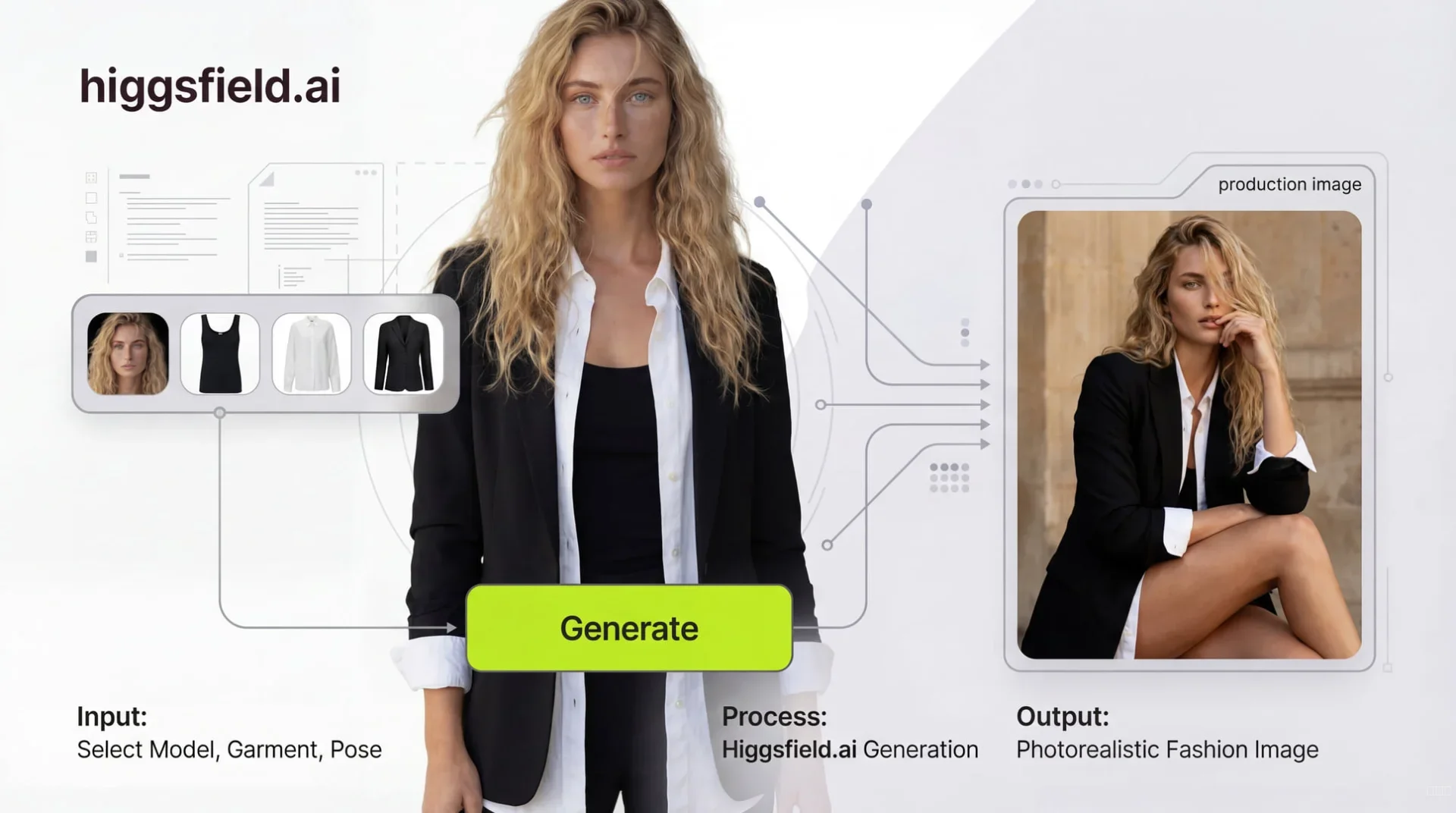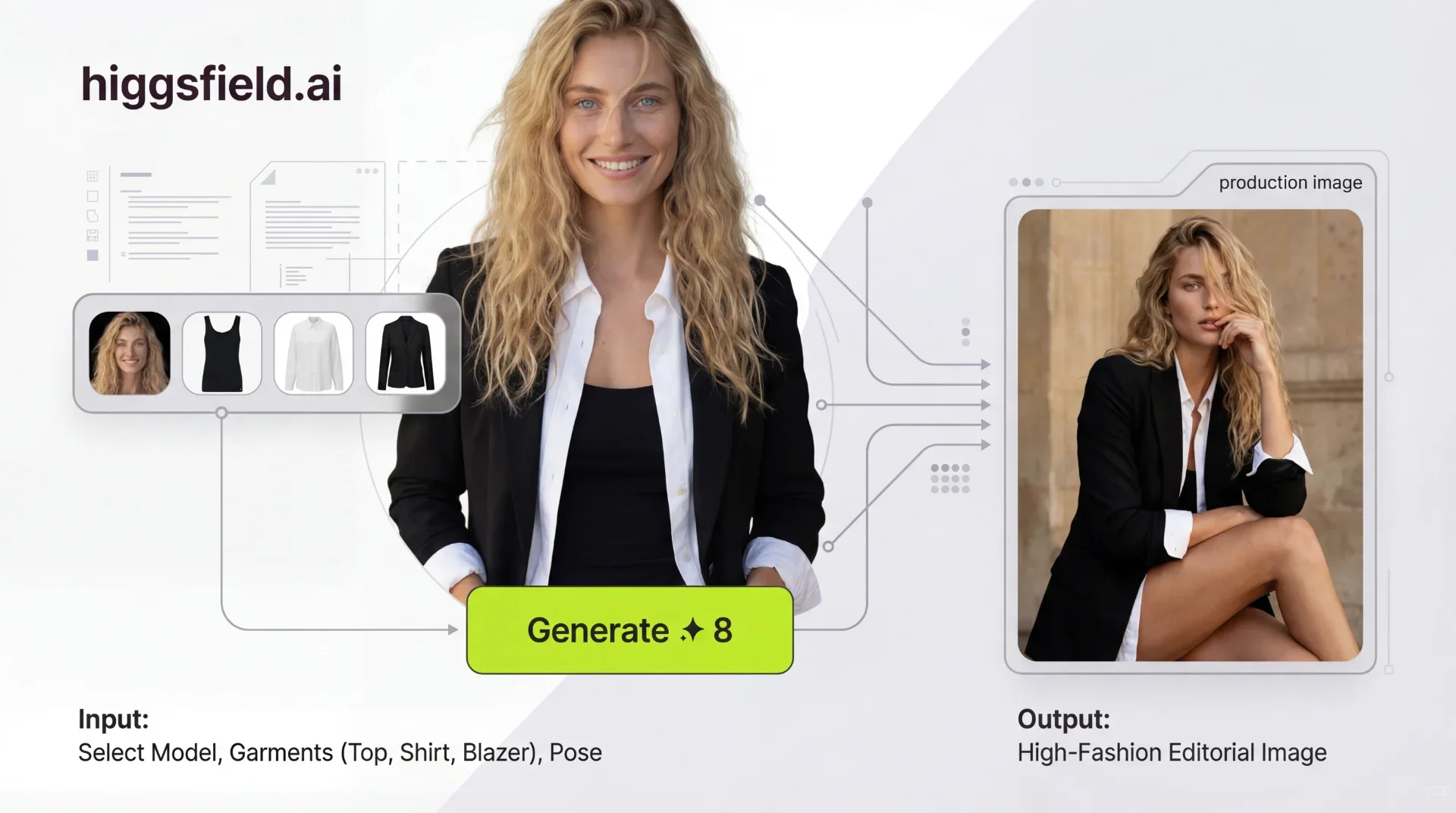

Imagine: you want to create an AI fashion photo. You have your model, your clothing, an idea in your head. You open Higgsfield and are faced with an empty text field. Now what?
Then the battle with words begins.
How do you describe a pose precisely enough for an AI to understand? How do you explain what the arm is doing, where the weight is, how the fabric falls? Most people type something like "model in elegant pose with white dress" and hope for the best. The result is exactly that: a good guess, but just not quite right.
The Zappa Engine works differently.
And it starts with something you probably already have. Pinterest boards full of images that inspire you. That one photo from a shoot in Milan. That lighting. That posture. That atmosphere you've been wanting to capture for months but couldn't yet translate into something usable. That is now your raw material.
You upload that reference image — and the engine analyzes it for you. Not vaguely, not interpretively. Precisely. Angle of the head, position of the arms, behavior of the fabric, quality of the light. Everything an AI needs to reproduce the image. What comes out is an editorial prompt you can paste directly into Higgsfield.
No guesswork. No ten iterations. Simply: image in, prompt out, get to work.
And then the feature that changes everything for fashion entrepreneurs.
You turn off the clothing module in the engine. One click. Zappa then does not describe the clothing from your reference image — you intentionally leave that blank. Next, in Higgsfield, you add your own standalone garment as a separate reference. A product photo, isolated, on a white background.
Higgsfield does the rest. Your clothing appears on the model. In that atmosphere. In that pose. In that lighting you found on Pinterest.
Your collection. Your images. No photo studio, no sample needed to put on, no day to schedule with a photographer.
This is how you build a complete lookbook production from your own clothing archive.
And if you want to adjust the atmosphere? Simply add a regular note in your own words — and the trained Zappa structure seamlessly incorporates it into the assignment. No technical hassle, no need to start over. Just adjust, as you would with a real photographer.
The real difference only becomes clear once you've used it. No more thinking in words. Think in images — and let the rest be handled.