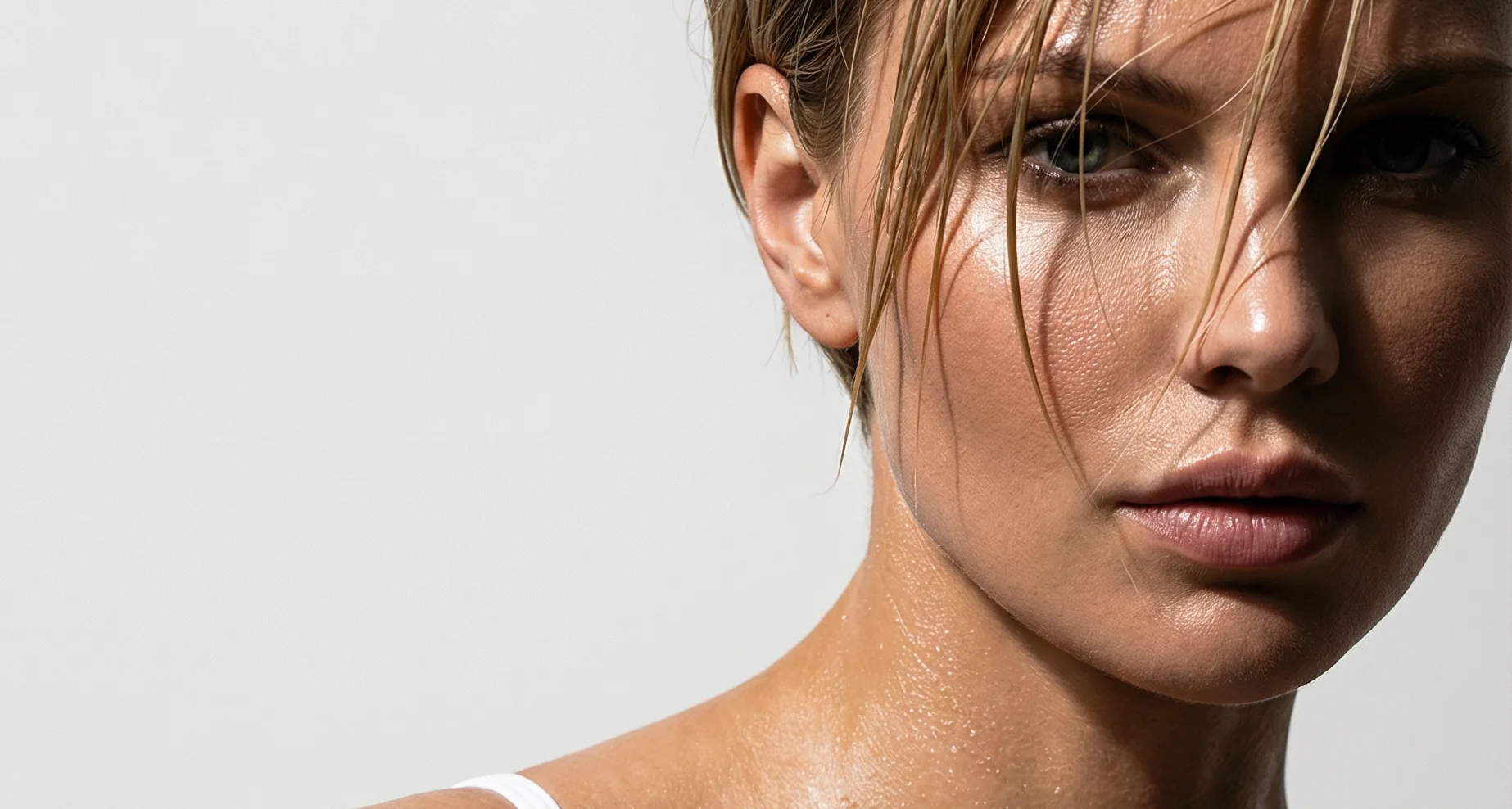

In recent years, we have created thousands of fashion images—for campaigns, lookbooks, and editorials. First with cameras, later with AI. What became increasingly clear: the quality of an image is determined almost entirely by the structure of the prompt.
Not by lengthy descriptions.
Not by creative words.
But by discipline.
This is how Zappa was born.
From Loose Prompts to a System
Most prompts you see online are actually little stories.
They try to describe an image as you would explain a scene.
This often works poorly.
AI models respond much better to structured photographic information:
framing, posture, points of contact, lighting, material, and environment.
That is why Zappa prompts are constructed as a kind of photographic instruction.
A typical Zappa prompt always follows the same order:
Type of image and framing
Body orientation
Head position
Arms and hands
Legs and weight
Points of contact with objects
Clothing and material
Lighting
Environment
This structure ensures that a model understands exactly how a photographer would construct the image.
No Interpretation, Only What Is Visible
Another important rule in Zappa is simple:
describe only what you actually see.
No assumptions.
No interpretation.
No style words.
If something is not visible, it does not belong in the prompt.
This prevents one of the biggest problems in AI image generation:
the model starts inventing details on its own.
By basing the prompt entirely on visible, physical information, the result remains much more stable and realistic.
Lighting Always Leads
In fashion photography, lighting determines almost everything.
That is why every Zappa prompt always contains a clear description of:
light source
direction of the light
contrast level
shadow edges
This gives the model the same information a photographer would use to set up a shoot.
That is one of the reasons why Zappa images often feel more photographic and less “AI”.
Why This Works Well with Tools Like Higgsfield
Zappa does not generate images.
It generates better prompts.
You can then use these prompts in tools like Higgsfield, where you can easily add your own model, face, or clothing.
The Zappa prompt provides the fashion structure and image quality, while the generation model produces the image.
This combination works surprisingly well:
Zappa directs the photography.
The model renders the image.
A Photographic Discipline
We do not see Zappa as a style or a filter.
It is more a discipline for writing prompts.
If an image feels as if a real photographer could have made it, then the prompt works.
If it looks like AI, then the prompt needs to be rewritten.
That is the simple rule behind Zappa.